
Should Patent Terms be Auctioned like Electromagnetic Spectrum?

AFVPR is a public resource conservation framework: calculating the AFVPR of a limited resource, so that we can plan for recovery and return of the value of those resources back to their original value, the intrinsic state we all enjoy.
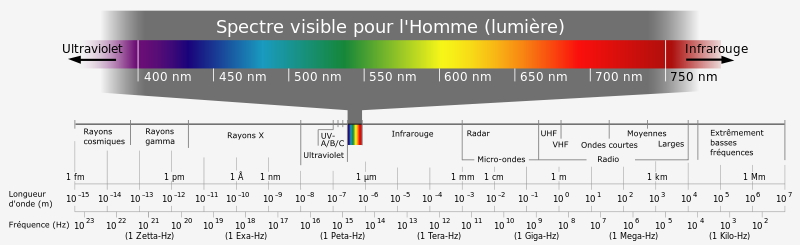
Electromagnetic_spectrum-fr-svg

Electromagnetic Spectrum

I wonder, could we apply the framework to patent rights?

Since (Quoting USPTO) “the term of a patent for utility/patent patent(s) is no longer based upon a term fixed at grant, the number of factors that must be considered increase the difficulty in calculating the term of a patent. A patent owner or the public must consider the following factors in calculating the expiration date of a patent for utility and plant applications. The factors include the following:

  • – type of application(utility, design, plant);
  • – filing date of the application;
  • – the grant date of the patent;
  • – benefit claims under 35 U.S.C. § 120, 121 or 365(c);
  • – patent term adjustments and extensions under 35 U.S.C. § 154;
  • – patent term extensions under 35 U.S.C. § 156;
  • – terminal disclaimer(s); and
  • – timely payment of maintenance fees.

Electromagnetic Spectrum is periodically auctioned off.

Governments reserve spectra for small players to prevent anti-competitive private cartel dominance of the public resource; and encourage full and frank ownership disclosure to get the license.

In the Age of Patent Aggregators, do we not have the same need?

  • – Are patent “barons” discouraging innovation outside University-Aggregator partnerships?
  • – Will more entrepreneurs leave jurisdictions that think that control of the patent sector in partnership with Aggregators mean that entrepreneurs will simply buckle?
  • – Will more entrepreneurs simply take their minds and wallets elsewhere, or simply expose patents, or simply sit back to watch patent portfolios drop in value if markets slowly decide that portfolios (and all the threatened “Pay Us or Else” lawsuits) have become a millstone around the necks of investors, and financiers, and insurers?

Since term duration is now malleable, should we manage patent rights differently?

  • – Should Patent Rights be treated as electromagnetic spectrum?
  • – With a segment reserved for small players;
  • – With full and frank ownership disclosure (including shell and associate companies):
  • – Periodically shuffled to encourage maximum competition?
  • – Foreign government-owned companies and entities required to adhere to the same transparent rules that domestic companies face?
  • – Foreign government-owned Aggregator partners made to face the same rules, or be excluded from the domestic marketplace?


Spectrum Image by: Sharayanan (Creative Commons license via Wikipedia)

Check out Antwerp’s Board of Innovation consulting group

boardofinnovationlogoAntwerp-based www.boardofinnovation.com has a neat business modeling toolkit.

  • – Purchase version
  • – Free version (download: with major corp models, a PowerPoint tool, etc.)

When looking at an opportunity for an employer or myself, my practice is to create a trading model using Word, Excel, PowerPoint or Visio; simultaneously working napkin-sketch numbers to see whether there revenue to cover costs.  And profit to make it worthwhile. For Triple Bottom Line, too.

Using this tool: I’ve created a high-level view for WarriorHealth CombatCare …this is the model that got evaluated by the US White House and Congress during their 2012-13 fiscal cliff debate, courtesy of three amazingly honourable US leaders. I created the model and novel deep layers after being the first to notice and report an incidence range of anticipated to actual Combat PTSD in US military reports. The value of the range becomes valuable as a way to build a solution, if reframed as an insurable financing spread. That’s how it was used here.

The toolkit cuts significant re-work time.

And is useful for all manner of companies, from start-ups to multinational business units; from lemonade stands, and mowing lawns, to co-ops, and charities.

Bravo!


Anticipated Future Value of Public Resources (AFVPR) – a shared resources’ framework


The common ground for Oil Sands Float Rights and Hydrological Spread water tax credits . . .is a public resource conservation framework: calculating the AFVPR of a limited resource, so that we can plan for recovery and return of the value of those resources back to their original value, the intrinsic state we all enjoy.  

  • – Using the AFVPR framework, we obtain market incentive to maximize self-interested conservation of the common resources we all depend on as a species and a civilization.
  • – Using AFVPR with Hydrological Spreads . . . we can manage limited supply, drought-induced shortages and over-pumping shortages, and minimize contamination of surface supplies, the water table, and local aquifers.  See the AFVPR water discussion here
  • – We can use AFVPR for . . . liquid water and water vapour for drinking, irrigation, and industrial use; energy supplies (hydroelectric, oil, gas, oil sands, solar), public forests, and topsoil).
  • – We can use AFVPR to . . .  create market incentive to cut industrial waste and contamination to zero (100% Zero Waste),
  • – Using AFVPR, governments offer incentive to create new technologies, such as vapour loss monitoring tools, to incentivize zero waste.
  • – Using AFVPR, entrepreneurs obtain incentive to create that new technologies, and the jobs that go with it.


The countries, states, and provinces that put AFVPR in place get market advantage first.

Are there ways that AFVPR could be used in your country?


Creative Commons Credit: – Video by Mr. Rain and Thunder